ID Age Verification
Confirm age eligibility without holding identity records
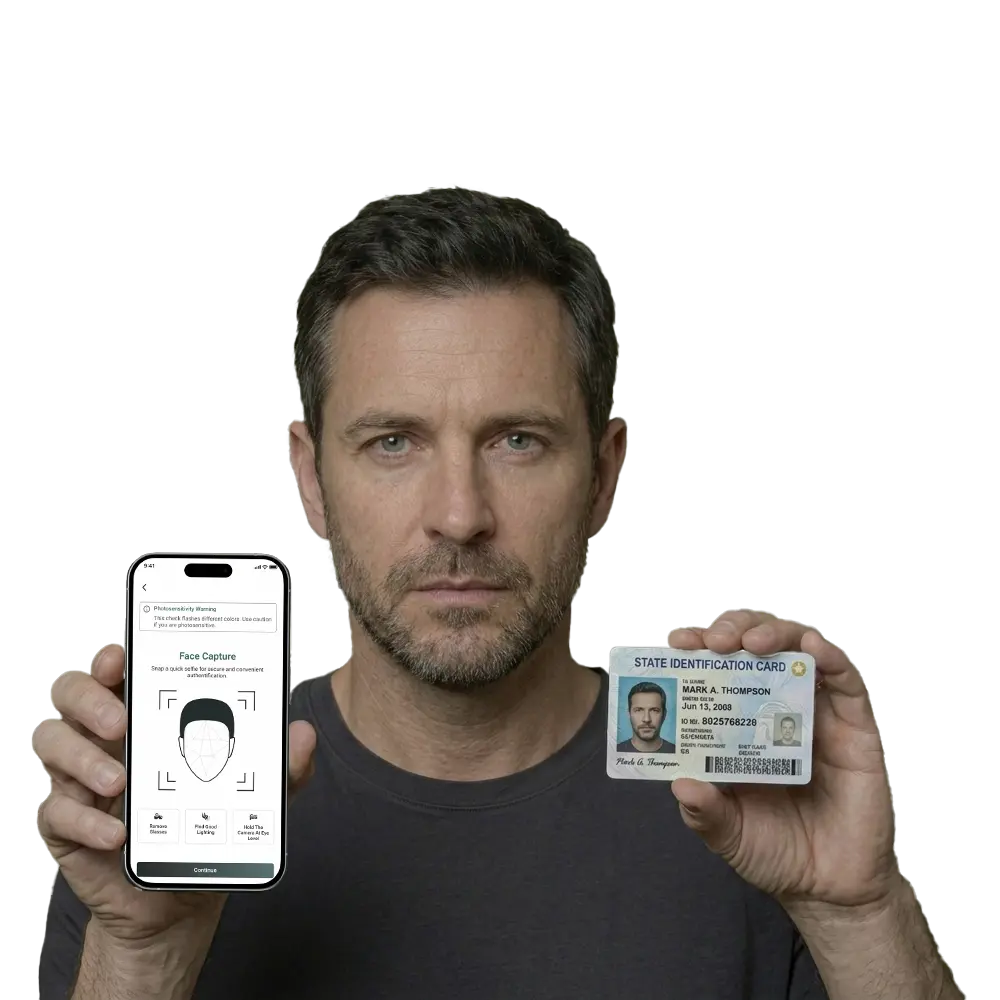
Age verification without ID custody
Age verification methods do not all give the same level of assurance. A self-declared age gate relies on the user being honest about it. ID-backed verification confirms eligibility against an authenticated government-issued document and a live check, which is what regulated environments generally expect.
Age App runs those checks inside its own verification layer and returns a decision. That lets a business raise its level of assurance without taking custody of the documents behind it, which is the trade most age gates get backwards.
Quickly confirm user age
Reduce underage access
Built for ID-backed age assurance
Smooth and Secure onboarding flow
Where ID-backed verification is the right fit
Stronger assurance where the stakes are highest
Regulated industries face increasing scrutiny around age-restricted access. Basic age gates and self-declared inputs often fail to meet enforcement expectations, especially in high-risk or publicly regulated environments.
The assurance comes from checking an authenticated document against a live person, rather than from asking. What the operator gains is a decision it can defend. What it avoids is a store of licence images that has to be secured, retained and deleted under rules that differ by state and by country.
Stronger Age Enforcement Controls
Validated government ID and biometric confirmation reduce underage access risk.
Reduced Identity Fraud Exposure
Document authentication and biometric liveness detection help prevent impersonation and falsified credentials.
Thresholds you configure per context
You set the threshold and the access context. Obligations vary by jurisdiction and implementation.
User-Controlled Identity Boundaries
Identity validation occurs within the Age App verification layer, and identity artifacts are not transferred to or stored within platform systems.
Audit-Ready Verification Records
Structured reporting supports internal review and regulatory inquiry without embedding identity documents in business infrastructure.
Operationally Efficient Integration
Deploys through structured APIs and embedded verification without disrupting existing user flows.
Stronger assurance. Controlled identity.
Age App checks an authenticated document against a live person, applies the threshold you set, and returns a signed result with an expiry. The documents behind that decision stay where they were checked.
What the platform receives here
Pass or fail, the threshold that applied, session validity and a signature.
What it never receives back
Name, DOB, government-ID images, biometric data, or a persistent platform identity credential.
If a check fails or is inconclusive
The platform receives a fail result and nothing about the reason. The user can start a new session and try again.
Where the documents are handled
Document checks happen inside the Age App verification layer. What is collected, who processes it and how long it is kept are set out in the Privacy Policy.
Records you can show an auditor
Session records show that a check ran, which threshold applied and when the result expired, without holding the document that produced it.
What you are still responsible for
Choosing the threshold, requesting a fresh result each time, and scoping your own legal obligations.
Ask about age.
Not identity.
Setup once.
A new live session each time access is asked for.