

Why Facial Biometric Liveness Are Important for Compliance and Security

Priscilla Miralles
Operations and Project Management Lead


Table of content
- Quick summary


Quick summary
Facial biometric liveness verifies that a real, live human is present during verification, preventing identity fraud, spoofing, and impersonation. It strengthens security for logins, sensitive actions, and high-value transactions. Liveness detection helps businesses meet KYC, AML, anti-spoofing, and privacy compliance requirements. Active and passive liveness checks enable secure verification without compromising user experience.
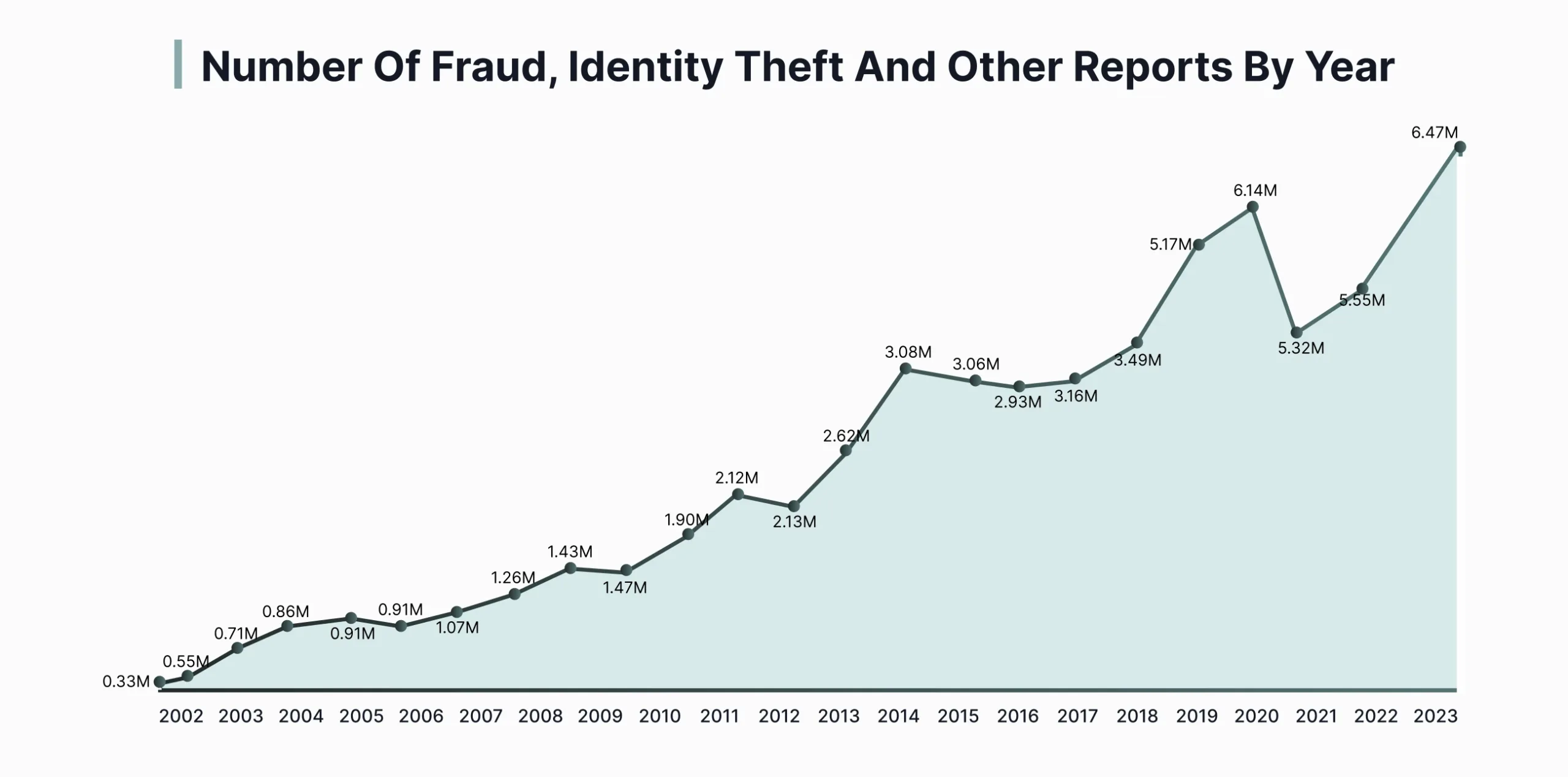
Have you ever wondered how secure your online accounts really are? Or how fraudsters manage to trick digital verification systems? In 2024, the FTC’s Consumer Sentinel Network received 6.47 million reports, related to fraud, identity theft, and other consumer complaints.
Traditional facial recognition systems can be deceived using photos, videos, masks, or even AI-generated deepfakes. So, what can business do to make sure that the person on the other side of the screen is real? Facial Biometric Liveness confirms the presence of a live human being, helping block spoofing and account takeovers while supporting compliance with KYC and AML regulations.
Even sophisticated systems are prone to failure without liveness detection, and businesses are at risk of losses and users compromised safety. Without liveness detection, attackers can sometimes gain access using nothing more than a photo or video. Liveness detection helps ensure that doesn’t happen.
What Is Facial Biometric Liveness Detection?
Facial biometric liveness is used to confirm that the face presented to a system belongs to a live individual, not a spoofed identity. It goes beyond matching facial features by analyzing natural human behavior, depth, texture, and movement.
“A good biometric system should not depend on secrecy, but the validation process must check for liveness of the readings.” — Dorothy E. Denning
Common Types of Liveness Detection.
Passive liveness
- Examines the micro-movements, skin texture, lighting patterns, and facial depth.
- No user action required
- Good with high-speed user interfaces.
Active liveness
- Asks the user to perform simple actions such as blinking or turning their head.
- Increases an additional level of verification.
- Applicable in high-risk situations.
Both methods are designed to prevent attacks which cannot be detected through static image matching alone.
Why Facial Biometric Liveness Is Essential for Security
As digital interactions continue to grow, fraud is increasing alongside them. Leading to why facial biometric liveness is widely adopted, it allows businesses to authenticate real users in real time and prevent fraud from the start.
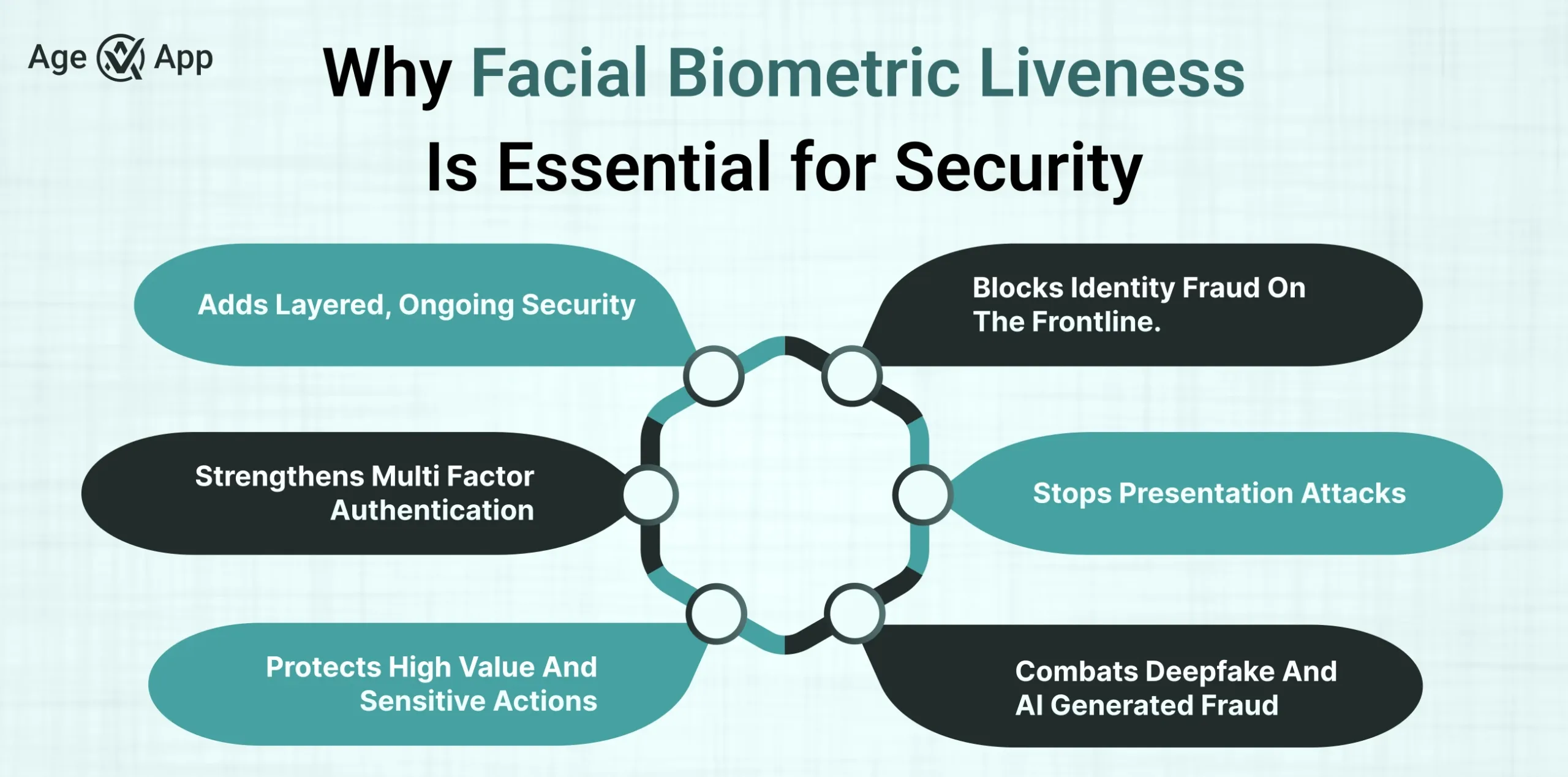
Blocks Identity Fraud on the Frontline
The majority of fraudulent acts online begin with onboarding or log-in. Facial liveness ensures that a real individual is present, preventing at the earliest stage. This helps prevent:
- Fraudulent or counterfeit accounts.
- Utilization of misappropriate identities.
- Synthetic identity fraud
Preventing fraud at the initial stage keeps platforms safer and builds greater user confidence.
Stops Presentation Attacks
In most cases, fraudsters will attempt to deceive systems with photos, videos, masks, or screenplays. Facial liveness prevents such attempts thus only real; live users are allowed through verification.
Combats Deepfake and AI Generated Fraud
Deepfakes have reached a level of realism that traditional verification methods are no longer effective. Facial liveness examines natural facial movements, and depth AI-generated media cannot reliably replicate. Reduces Account Takeovers
Facial liveness provides a high level of protection even when the login information is stolen. In Age App, liveness is used only during verification or authentication to confirm live user presence, ensuring unauthorized users cannot gain access.
Protects High Value and Sensitive Actions
For platforms executing payments or personal information, facial liveness provides additional safeguards during critical actions such as:
- Large fun transfers or high value transactions.
- Profile or identity updates
- Password resets
- New device logins
This ensures that businesses and the users remain protected when it matters most.
Strengthens Multi Factor Authentication
Facial liveness adds a biometric layer that cannot be guessed, shared, or duplicated. When combined with passwords or one-time passcodes (OTPs), it significantly strengthens the authentication process, making it more secure and resilient.
Adds Layered, Ongoing Security
Facial liveness isn’t limited to a single verification point. It can be applied at various stages of the user journey, offering ongoing protection without introducing unnecessary friction for legitimate users.
How Facial Biometric Liveness Is Used to Meet Global Compliance Requirements
Digital businesses can no longer afford to overlook regulatory requirements. Facial biometric liveness plays a critical role in ensuring compliance while maintaining a seamless, non-disruptive user experience.
Meets KYC and AML Requirements
Regulators require businesses to verify identities, prevent impersonation during onboarding, and high-risk activities. Facial liveness confirms that the individual undergoing verification is physically present and the identity document provided.
It enables compliance with:
- KYC Onboarding and identity verification requirements.
- Fraud prevention and AML risk controls.
- Customer due diligence and ongoing monitoring obligations.
By strengthening identity checks, businesses reduce regulatory risk and confidently onboard legitimate users.
Aligns With Anti-Spoofing Standards
Facial biometric liveness is designed to fulfill anti-spoken demands by detecting attempts to use photos, videos, masks, or synthetic media.
This ensures identity verification processes align with established security and compliance standards.
Supports Privacy-First Compliance Models
Contemporary facial liveness authentication does not save facial images or other sensitive user information over an extended period. Modern liveness solutions advocate the principles of data minimization and privacy-by-design principles mandated by many global data protection laws.
Companies do not need to enhance data exposure or create a privacy risk to ensure that they meet compliance needs.
Reduces Compliance Failures and Penalties
Facial liveness enables organizations to avoid fraudulent access by preventing access at an early stage:
- Regulatory breaches and leakages.
- Unsuccessful audits and investigation reports.
- Sanctions and penalties.
- Expensive cleaning and re-checking measures.
- This is more proactive, which makes it easier to comply, scale and more resistant as the regulations keep on changing.
What Users Actually Experience During Facial Biometric Liveness Checks
During facial biometric liveness checks, users either perform active actions like blinking, smiling, or turning their head, or undergo passive background analysis of skin texture, micro-movements, and subtle facial cues.
This ensures the system detects real humans, not photos, videos, or deepfakes, while balancing secure verifications with user convenience.
What Users Are Asked to Do During Liveness Verification
Users may be asked to blink, smile, or turn their head in active liveness checks
No action is required in passive liveness checks
How the Liveness Check Feels for Users
Active liveness provides stronger verification but may feel slightly intrusive
Passive liveness feels seamless since it runs in the background
Passive liveness checks typically complete in about 2 seconds on average, improving conversion rates around 92 percent in the US when deployed in onboarding flows (data aggregated from industry performance reports).
What Facial Biometric Liveness Detects Behind the Scenes
- Natural blinking and eye movement
- Subtle facial muscle shifts and micro expressions
- Head movement and three-dimensional depth
- Skin texture differences between real faces and screens
- Pulse related skin tone changes that indicate a live human
How Facial Liveness Improves Security
- Blocks photos, videos, masks, and deepfake attempts
- Confirms real user presence in real time
Overall Impact on User Experience and Reliability
- Genuine users complete verification quickly
- Fraud attempts are stopped early
- Platforms balance security and ease using hybrid approaches
Final Thought
Facial biometric liveness is a critical component of modern identity verification, ensuring that only real, live users can complete sensitive actions, logins, and transactions. By blocking photos, videos, masks, and deepfakes, it prevents identity fraud and account takeovers at the earliest stage. When combined with KYC, AML, and privacy-first practices, liveness detection not only strengthens compliance but also maintains a seamless user experience. Ultimately, integrating facial biometric liveness allows businesses to protect their platforms, secure high-value interactions, and build confidence with users in a world where digital fraud is increasingly sophisticated.
Priscilla Miralles
Operations and Project Management Lead
Priscilla Miralles brings over 15 years of operational and project management experience to ChainIT, where she drives efficiency and supports seamless cross-team execution. Known for her strong administrative leadership and client service expertise, she excels at managing complex workflows and optimizing organizational processes.
Frequently Asked Questions
Have questions about how Age App works, what it stores, or where you can use it? You’re in the right place. This page covers everything from how we verify your age to how we protect your privacy without tracking you or exposing your identity.Liveness detection ensures that the person using a biometric system is a real, live human and not a photo, video, mask, or deepfake. It prevents fraud, account takeover, and impersonation while enhancing overall security.
Liveness checks are crucial because they stop fake identities from bypassing biometric systems. By verifying real-time human presence, they protect accounts, sensitive transactions, and personal data from fraudsters.
Face recognition identifies and verifies individuals by analyzing their facial features. It is used for secure logins, access control, identity verification in financial services, age verification, and monitoring for fraud.
Yes, when combined with liveness detection and proper privacy measures, facial recognition is safe. It ensures secure access, reduces identity fraud, and protects user data without storing sensitive information unnecessarily.
Biometrics is a broad category of methods that identify people using physical or behavioral traits like fingerprints, iris, or voice. Face recognition is a type of biometric that uses facial features specifically to verify or identify individuals.
Biometrics provide a secure and unique way to identify individuals. They are difficult to steal or replicate, making systems more resistant to fraud compared to passwords, PINs, or physical tokens alone.
Advantages: high security, uniqueness, convenience, and fast authentication.
Disadvantages: potential privacy concerns, need for proper system setup, and possible false positives or negatives without liveness verification.
Facial recognition identifies or verifies a person by comparing facial features. Liveness checks go a step further to ensure the face is real and live, preventing spoofing or deepfake attacks.
Facial recognition helps Age App verify age securely and instantly without physical contact. Combined with liveness detection, it ensures the person is real, prevents identity misuse, and grants access only to eligible users.
The two main functions are:
- Identification – determining who someone is by comparing their biometric data to a database.
- Verification/Authentication – confirming that a person is who they claim to be.
Prove your age. Protect your privacy.

No more forms. No more stress. One app to verify them all.


